
-
×
 Buy Tapentadol Online - 360 Pills
1 × $749.00
Buy Tapentadol Online - 360 Pills
1 × $749.00

27
Apr
Apr
Tramadol Guide
How Long Does Tramadol Stay in Your System? Complete Duration Guide
Introduction – how long does tramadol stay in your system
Tramadol is a prescription pain medication commonly used to treat moderate to moderately severe pain. One of the most frequently asked questions about this drug is how long it remains in the body after use. Understanding how tramadol is processed, how long its effects last, and how long it can be detected in different tests is important for both safety and proper medical use.
This guide explains in detail how long tramadol stays in your system, what factors influence its duration, and what patients should know about its metabolism and elimination.
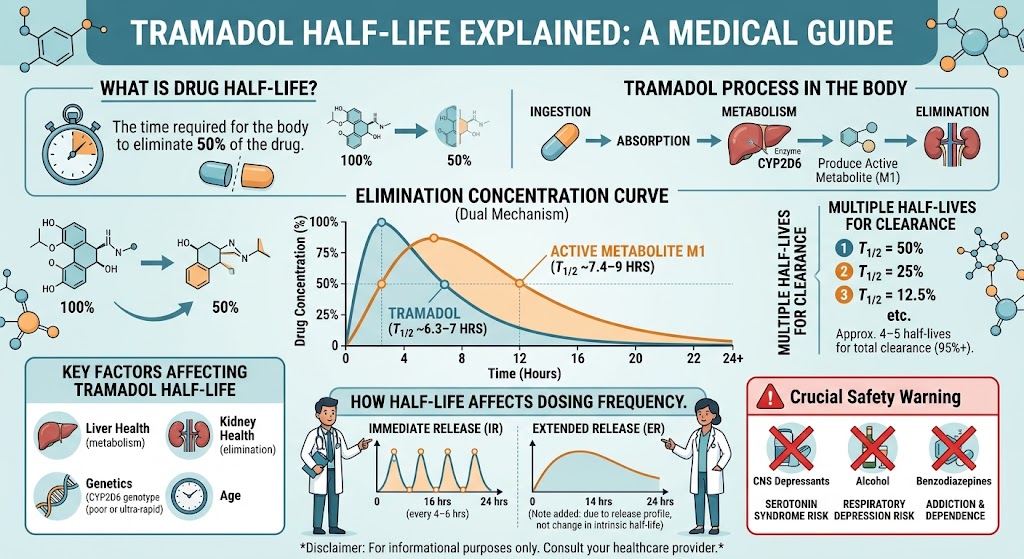
How Tramadol Is Processed in the Body
After oral administration, tramadol is absorbed through the digestive system and enters the bloodstream. It is then metabolized in the liver, where it is converted into active metabolites that contribute to its pain-relieving effects. One of these metabolites is significantly more potent than tramadol itself.
The drug and its metabolites are eventually eliminated from the body through the kidneys in urine. Because of this process, both liver and kidney function play a major role in determining how long tramadol stays in the system.
Tramadol Half-Life Explained
The concept of half-life is essential to understanding how long a drug remains in the body. The half-life of a medication is the amount of time it takes for half of the drug to be eliminated from the bloodstream.
Tramadol has an average half-life of approximately 5 to 7 hours, while its active metabolite has a slightly longer half-life of about 6 to 8 hours. It generally takes around 5 half-lives for a drug to be almost completely cleared from the body.
Based on this, tramadol can remain in the system for approximately 24 to 48 hours, although this can vary depending on individual factors.
How Long Do the Effects of Tramadol Last?
The duration of tramadol’s effects depends on the formulation used.
Immediate-release tramadol typically provides pain relief for about 4 to 6 hours, making it suitable for short-term or acute pain management. Extended-release versions are designed to release the drug slowly over time and can provide relief for up to 24 hours.
Even after the noticeable effects wear off, small amounts of the drug may still remain in the body.
Detection Times in Drug Tests
Tramadol can be detected in different types of drug tests for varying lengths of time. These detection windows depend on the sensitivity of the test and the individual’s metabolism.
Urine Test
Tramadol is usually detectable in urine for 1 to 4 days after the last dose. This is the most common method used in medical and workplace testing.
Blood Test
In blood tests, tramadol is typically detectable for up to 24 hours, although this window may be shorter in some individuals.
Saliva Test
Saliva tests can detect tramadol for approximately 1 to 2 days after use.
Hair Test
Hair follicle tests have a much longer detection window and may detect tramadol for up to 90 days, although these tests are less commonly used.
Factors That Affect How Long Tramadol Stays in Your System
The duration tramadol remains in the body can vary widely from person to person. Several factors influence this process.
Age
Older adults may process tramadol more slowly due to reduced liver and kidney function, which can extend the drug’s presence in the body.
Metabolism
Individuals with faster metabolic rates tend to eliminate tramadol more quickly, while those with slower metabolism may retain it for longer periods.
Liver and Kidney Function
Since tramadol is metabolized in the liver and excreted through the kidneys, any impairment in these organs can significantly prolong its elimination.
Dosage and Frequency
Higher doses and long-term use can lead to accumulation in the body, increasing the time required for complete elimination.
Body Composition
Factors such as body fat percentage and overall health can also influence how drugs are stored and processed in the body.
Can Tramadol Build Up in the System?
Yes, tramadol can accumulate in the body if taken frequently or in high doses, especially when extended-release formulations are used. This buildup can increase the risk of side effects and toxicity, particularly in individuals with slower metabolism or impaired organ function.
When Is Tramadol Fully Cleared?
While most of the drug is eliminated within 1 to 2 days, trace amounts may remain slightly longer depending on individual factors. Complete clearance does not necessarily mean the drug is no longer detectable, as sensitive tests can identify even small residues.
Safety Considerations
Understanding how long tramadol stays in your system is important for avoiding drug interactions and ensuring safe use. Patients should avoid combining tramadol with alcohol or other sedatives, as the effects can overlap even after the primary pain relief has worn off.
It is also important not to take additional doses too soon, as this can lead to accumulation and increase the risk of serious side effects such as respiratory depression or seizures.
Frequently Asked Questions
How long does tramadol stay in urine?
Tramadol is usually detectable in urine for one to four days after the last dose.
Does tramadol stay longer in the body with long-term use?
Yes, prolonged use can lead to accumulation, which may extend the time it takes for the drug to be fully eliminated.
How long do tramadol effects last?
Immediate-release tramadol lasts about four to six hours, while extended-release versions can last up to 24 hours.
Can hydration or exercise speed up elimination?
While staying hydrated and maintaining a healthy lifestyle supports overall metabolism, there is no reliable way to significantly speed up the elimination of tramadol.
Conclusion
Tramadol typically stays in the system for 24 to 48 hours, although detection times can vary depending on the type of test and individual health factors. Its effects may wear off within hours, but the drug can remain in the body longer, especially with repeated use.
A clear understanding of tramadol’s duration helps ensure safe usage, reduces the risk of interactions, and supports responsible pain management under medical guidance.
