
-
×
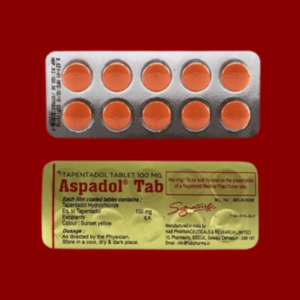 Buy Tapentadol Online - 360 Pills
1 × $749.00
Buy Tapentadol Online - 360 Pills
1 × $749.00
20
May
May
Tramadol Guide
Tramadol vs. Hydrocodone: Differences in Pain Management
| Buy Tramadol Online | Buy Tramadol 100mg Online US to US |
| Buy Tapentadol 100mg Online | Buy Citra Tramadol 100mg Online |
When managing moderate to severe pain, healthcare providers often choose between different classes of analgesics. Two of the most commonly prescribed medications are tramadol and hydrocodone. Both are powerful, centrally acting pain relievers, and obtaining either medication strictly requires a valid prescription from a licensed medical professional. While they share the goal of alleviating pain, they operate differently within the body, carry distinct side effect profiles, and have different legal classifications.
How They Work in the Body
Understanding the mechanism of action is crucial for distinguishing these two medications.
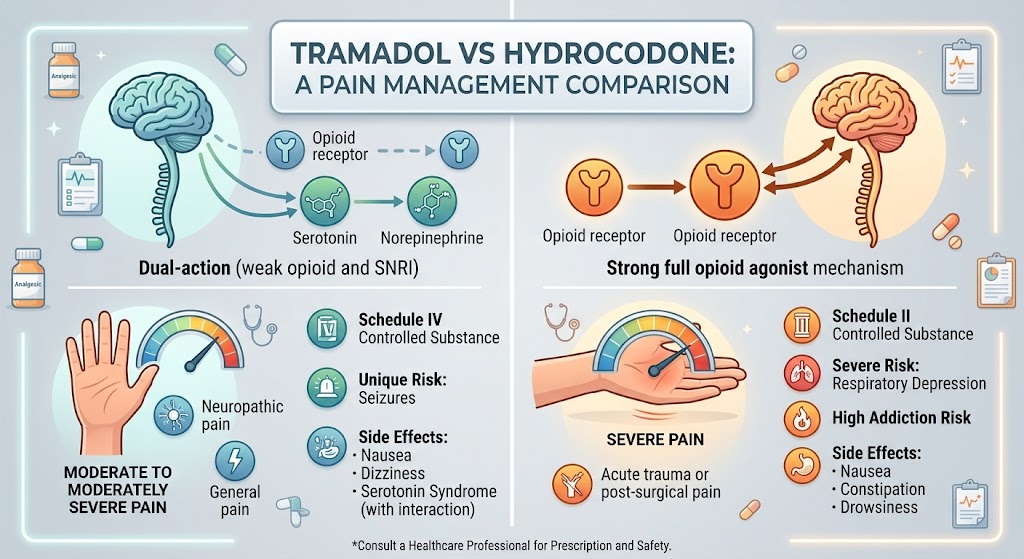
Hydrocodone is a traditional, semi-synthetic opioid. It works by binding directly and strongly to the mu-opioid receptors in the brain and spinal cord. By attaching to these receptors, hydrocodone blocks pain signals from reaching the brain, providing highly effective relief for severe pain.
Tramadol, on the other hand, is a synthetic analgesic with a unique dual-action mechanism. Like hydrocodone, it binds to mu-opioid receptors, but much more weakly. However, tramadol also acts as a serotonin-norepinephrine reuptake inhibitor, often abbreviated as SNRI. This means it increases the levels of serotonin and norepinephrine in the brain, which helps to further inhibit pain signals. This dual action makes tramadol effective for neuropathic pain as well as nociceptive pain.

Efficacy and Uses
Because of their different strengths and mechanisms, doctors prescribe them for different levels of pain.
- Hydrocodone is typically prescribed for severe pain that requires a strong opioid, such as post-surgical pain or severe injury. It is often combined with non-opioid pain relievers like acetaminophen to enhance its efficacy.
- Tramadol is generally indicated for moderate to moderately severe pain. Due to its SNRI properties, it is frequently used off-label to manage chronic nerve pain conditions.
Comparison Overview
| Feature | Tramadol | Hydrocodone |
| Primary Mechanism | Weak opioid agonist and SNRI | Strong full opioid agonist |
| Typical Pain Level | Moderate to moderately severe | Severe |
| Legal Classification | Schedule IV Controlled Substance | Schedule II Controlled Substance |
| Requirement | Valid prescription strictly required | Valid prescription strictly required |
Side Effects and Risks
Both medications share common opioid-related side effects, including nausea, dizziness, drowsiness, and constipation. However, their specific severe risks differ significantly.
Hydrocodone carries a high risk of respiratory depression, especially if taken in high doses or combined with other central nervous system depressants like alcohol. Severe respiratory depression can be fatal.
Tramadol has a lower risk of respiratory depression but introduces two unique and severe risks. First, tramadol can lower the seizure threshold, making patients more susceptible to seizures, even at standard doses. Second, because it increases serotonin levels, combining tramadol with other serotonergic medications, such as certain antidepressants, can trigger Serotonin Syndrome. This is a potentially life-threatening condition characterized by rapid heart rate, confusion, and muscle rigidity.
Addiction and Abuse Potential
Both medications carry a risk of physical dependence, addiction, and abuse. The Drug Enforcement Administration classifies them differently based on their perceived potential for abuse.
Hydrocodone is a Schedule II controlled substance, meaning it has a high potential for abuse that can lead to severe psychological or physical dependence.
Tramadol is a Schedule IV controlled substance. While initially thought to have a very low potential for abuse, clinical experience has shown that tramadol addiction is a significant risk, and abruptly stopping the medication can cause severe withdrawal symptoms.
Conclusion
Choosing between tramadol and hydrocodone depends entirely on the specific type and severity of pain, as well as the patient’s medical history. Because both medications carry severe risks and high potential for dependence, they must be used exactly as directed by a healthcare provider. Remember, dispensing or purchasing these medications strictly requires a valid prescription to ensure patient safety and legal compliance.
Medical References
Smith, J. A., and Doe, R. B., 2021. Comparative Pharmacology of Opioid Analgesics. Journal of Pain Management, volume 45, pages 112-125.
Williams, C. D., 2019. The Dual Mechanism of Tramadol: Benefits and Risks. Neurological Sciences Review, volume 12, pages 88-94.
Johnson, M. E., 2022. Addiction Potential of Schedule II versus Schedule IV Analgesics. Addiction Medicine Today, volume 33, pages 45-51.
