
May
Tramadol Guide
Tramadol Withdrawal: Symptoms, Timeline, and Detox Guide
| Buy Tramadol Online | Buy Tramadol 100mg Online US to US |
| Buy Tapentadol 100mg Online | Buy Citra Tramadol 100mg Online |
The Unique Nature of Tramadol Withdrawal
Because tramadol features a dual-action mechanism—acting as both a weak opioid and a serotonin-norepinephrine reuptake inhibitor—withdrawing from it is uniquely difficult. Patients abruptly stopping the medication often experience two concurrent sets of withdrawal symptoms: traditional opioid withdrawal and atypical SNRI withdrawal. This complex presentation makes medical supervision highly recommended during the detox process.
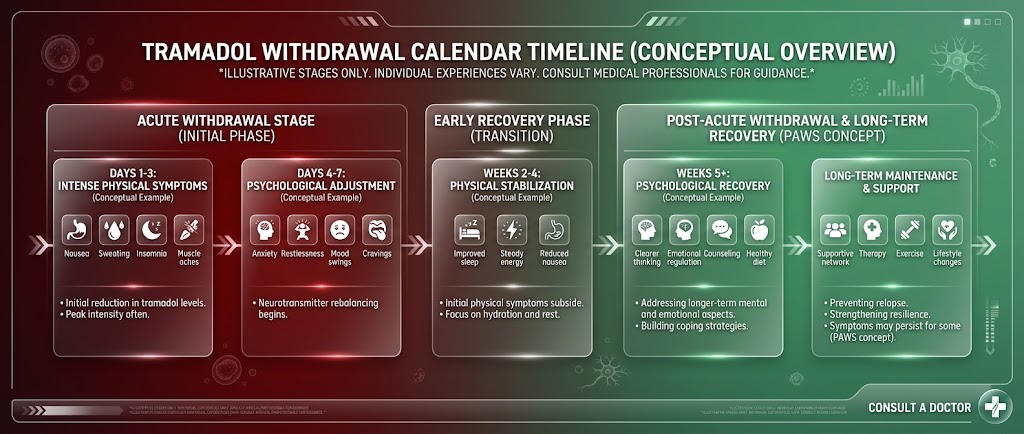
The Withdrawal Timeline
The timeline for withdrawal depends heavily on how long the patient took the drug and at what dosage. However, a general timeline follows this structure:
- Days 1 to 3: Symptoms usually begin within 12 to 24 hours of the last dose. Early symptoms include severe anxiety, restlessness, sweating, runny nose, and yawning.
- Days 4 to 7: This is typically the peak of the withdrawal phase. Patients often experience intense muscle aches, stomach cramps, diarrhea, nausea, and vomiting. Atypical symptoms like paranoia, panic attacks, and tingling in the extremities may also occur.
- Days 8 to 14: Physical symptoms begin to subside significantly. However, psychological symptoms, such as depression, insomnia, and drug cravings, may persist.

Safe Detox Strategies
Never attempt to stop taking tramadol “cold turkey.” Abrupt cessation shocks the central nervous system and drastically increases the risk of severe atypical symptoms, including hallucinations and extreme panic. The safest and most effective method for detoxing is a medically supervised taper. A physician will create a schedule to gradually reduce the dosage over several weeks, allowing the brain to slowly adjust to lower levels of the drug. Medications like clonidine or anti-nausea drugs may also be prescribed to manage breakthrough symptoms.
