
May
Tramadol Guide
The Risks of Tramadol Addiction and Abuse Potential
| Buy Tramadol Online | Buy Tramadol 100mg Online US to US |
| Buy Tapentadol 100mg Online | Buy Citra Tramadol 100mg Online |
Understanding the Abuse Potential
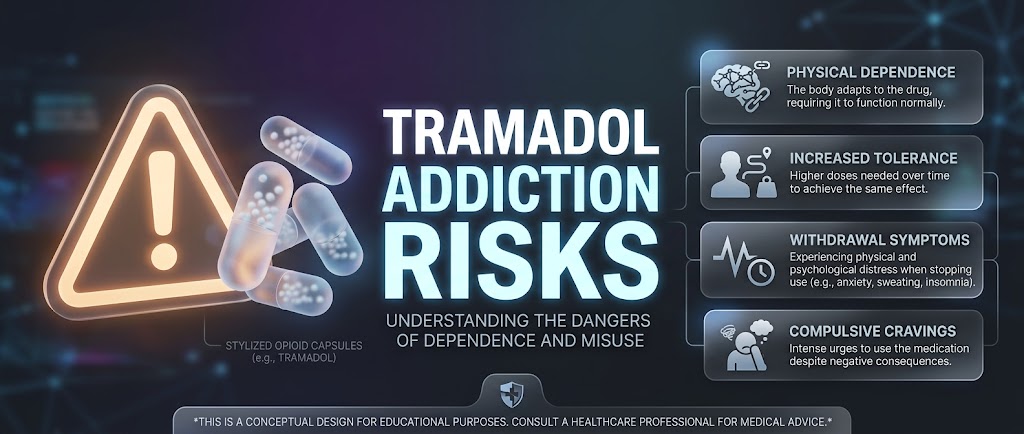
When tramadol was first introduced to the medical market, it was widely believed to carry a lower risk of addiction compared to traditional opioids like oxycodone or hydrocodone. However, years of clinical data and patient outcomes have proven that tramadol carries a highly significant risk for abuse, misuse, and physical dependence. Because it stimulates the brain’s reward center by binding to mu-opioid receptors, users can develop a psychological and physical reliance on the euphoric and pain-relieving effects.
The Path to Physical Dependence
Physical dependence can occur even when patients take the medication exactly as directed by their physician. Over time, the central nervous system adapts to the presence of the drug. The body begins to require higher doses to achieve the same level of pain relief, a phenomenon known as tolerance. When a patient develops tolerance, they may be tempted to take more than their prescribed dose, which accelerates the path toward addiction. Dispensing this medication strictly requires a valid prescription, and doctors carefully monitor usage to prevent dose escalation.

Signs of Tramadol Misuse
Identifying addiction early is critical for preventing an overdose. Common signs of tramadol abuse include:
- Taking the medication more frequently than prescribed.
- Crushing tablets to snort them or dissolve them for injection.
- “Doctor shopping” to obtain multiple prescriptions.
- Experiencing intense cravings for the medication.
- Neglecting personal or professional responsibilities due to drug use.
FDA Warnings and Scheduling
Due to its potential for abuse, the Drug Enforcement Administration classifies tramadol as a Schedule IV controlled substance. The FDA has issued strict black box warnings regarding the risks of addiction, respiratory depression, and fatal overdose. Patients with a history of substance abuse or mental health disorders are at a statistically higher risk of developing a tramadol addiction and require extreme caution if prescribed this medication.
How Long Does Tramadol Stay in Your System?
Meta Title: How Long Does Tramadol Stay in Your System?
Meta Description: Find out the half-life of tramadol and exactly how long it remains detectable in urine, blood, saliva, and hair drug tests.
Keywords: how long does tramadol stay in system, tramadol half-life, tramadol drug test, tramadol urine test, tramadol metabolism
Image Prompt: A full wide infographic fit to screen showing a timeline of tramadol metabolism. Visuals include a human silhouette with a glowing liver, and sleek icons for blood, urine, and hair tests with timeframes next to them. Modern medical aesthetic.
The Half-Life of Tramadol
To understand how long tramadol remains in the body, one must look at its elimination half-life. The half-life of a drug is the time it takes for the active concentration of the substance to reduce by half in the bloodstream. For immediate-release tramadol, the half-life is approximately 6.3 hours. However, the liver metabolizes tramadol into an active metabolite called O-desmethyl-tramadol, which has a slightly longer half-life of about 7.4 hours. It generally takes four to five half-lives for a drug to be completely cleared from the system, meaning tramadol is mostly flushed from the bloodstream within 35 to 40 hours.
Detection Windows for Drug Testing
While the physical effects fade within a day or two, tramadol and its metabolites remain detectable in the body for much longer, depending on the testing method used.
- Urine Tests: This is the most common method for drug screening. Tramadol can typically be detected in urine for 1 to 4 days after the final dose.
- Blood Tests: Because drugs metabolize quickly out of the blood, detection windows are short. Tramadol is usually detectable in blood for 24 to 48 hours.
- Saliva Tests: Similar to blood, saliva tests can detect the presence of tramadol for up to 48 hours following ingestion.
- Hair Follicle Tests: This method offers the longest detection window. Traces of tramadol become embedded in the hair shaft and can be detected for up to 90 days after the last use.
Factors That Influence Elimination
The exact timeline for clearing tramadol varies heavily from person to person. Factors include age, liver function, and kidney health. Patients with compromised hepatic or renal function will clear the drug much slower. Additionally, the dosage amount, frequency of use, and the patient’s individual metabolic rate play significant roles in how long the substance remains detectable.
